
HBOT
Support your body's recovery after exercise.

Atmospheric Air
1.3 ATA
Controlled Experience
Post-Exercise Recovery
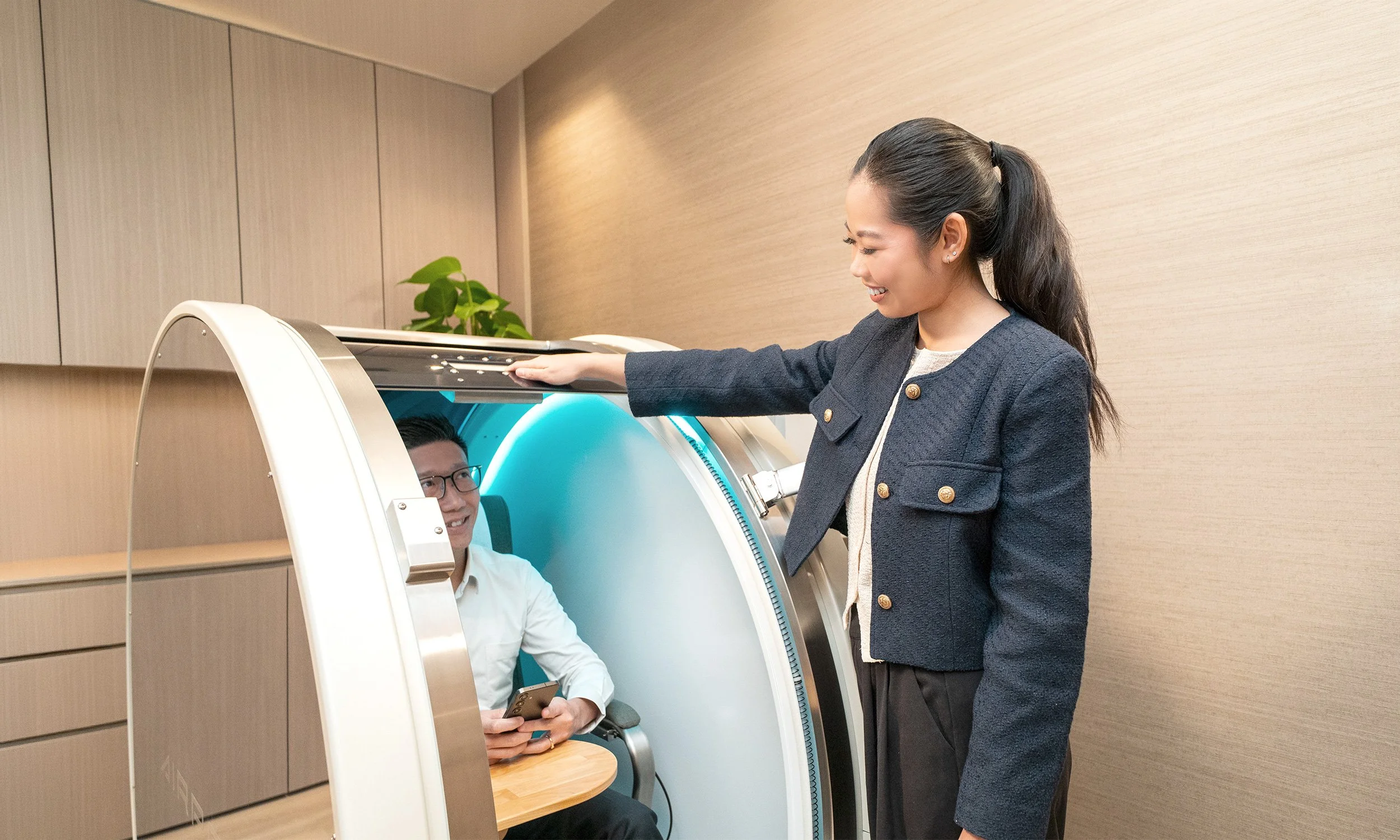
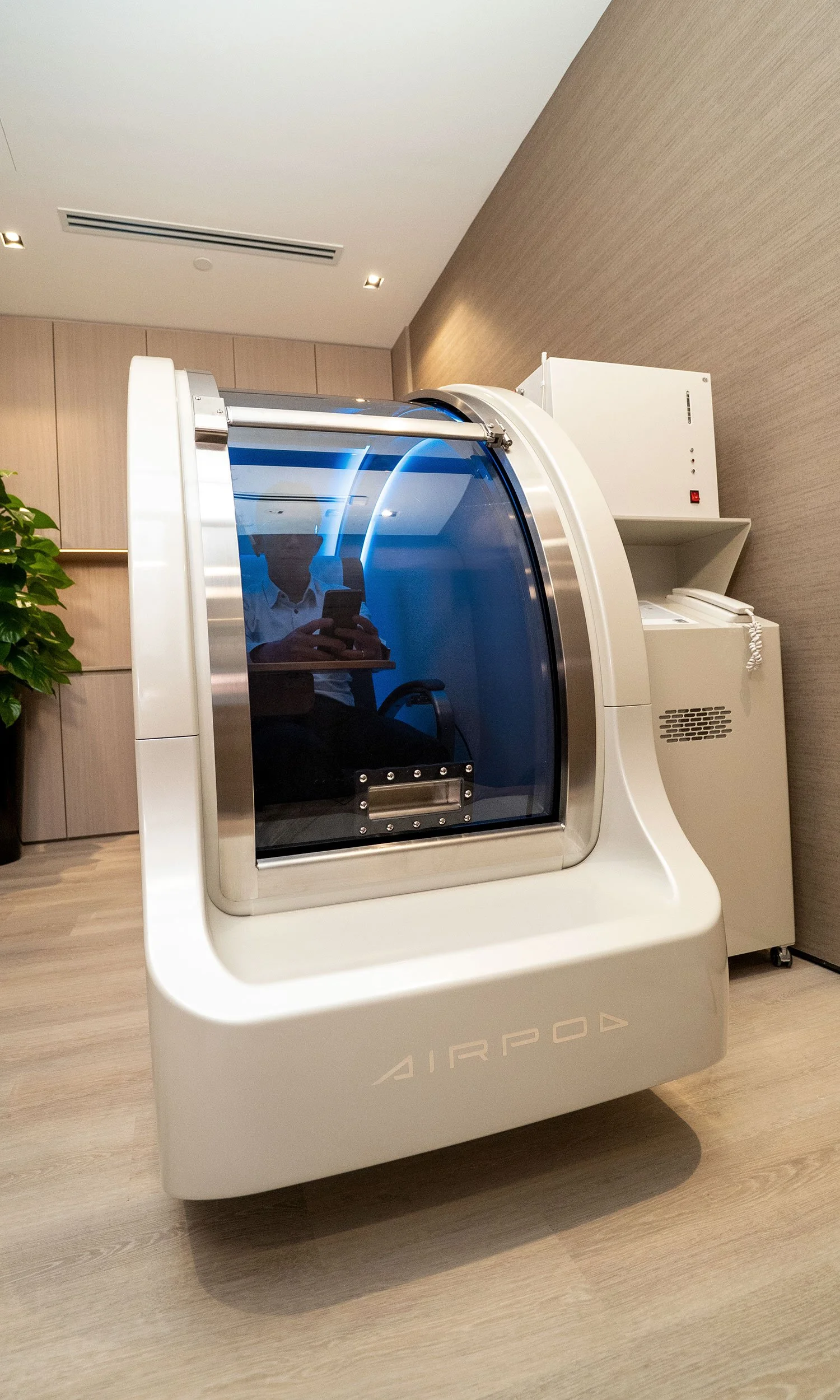
R17 offers a controlled-pressure MediWellness experience at 1.3 ATA using atmospheric air.
Hyperbaric oxygen therapy has been studied for exercise recovery because increased pressure and oxygen availability may influence tissue oxygenation and recovery processes. Research has found improvements in some measures of exercise-induced muscle injury, although results vary across protocols.
Why consider it?
Intense exercise places physical stress on your muscles as they adapt and recover.
R17's controlled-pressure experience can be incorporated into a broader post-exercise recovery routine, subject to individual suitability.
Why 1.3 ATA?
Pressure, oxygen concentration and session duration all influence the physiological effects of hyperbaric exposure.
Higher pressure is not automatically better. Clinical HBOT commonly uses around 2.0 to 3.0 ATA with medical-grade oxygen for specific medical indications. R17 uses 1.3 ATA with atmospheric air for its MediWellness protocol, so it is not intended to replicate clinical HBOT.
What to expect
You will enter the chamber, and the pressure will gradually increase to 1.3 ATA.
You may feel pressure in your ears during compression and decompression, similar to the sensation during take-off or landing on a flight.
Once the chamber reaches the prescribed pressure, you can sit back, rest or listen to something during the session.
Frequently Asked Questions
-
It may be incorporated into your post-exercise recovery routine, subject to individual suitability.
-
No. Clinical HBOT uses medical-grade oxygen under pressure and is prescribed for specific medical indications. R17 uses atmospheric air at 1.3 ATA as a MediWellness experience.
-
Higher pressure does not automatically mean greater benefit. The appropriate pressure depends on the purpose and overall protocol. R17's 1.3 ATA atmospheric-air protocol is designed for its MediWellness offering.
-
You may experience pressure in your ears while the chamber is being pressurised and depressurised. The sensation is similar to changes in pressure during a flight.
-
Yes. Once the chamber reaches the prescribed pressure, you can sit back, rest or listen to something during the session.